
News By Zenvor News
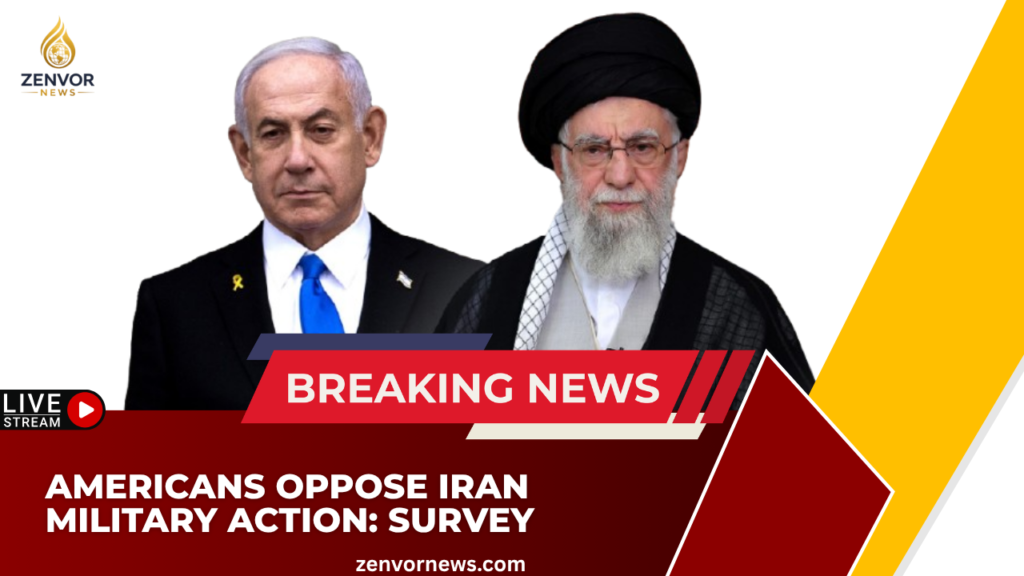
A recent survey has highlighted increasing public dissatisfaction in the United States regarding military action against Iran, with a significant majority questioning both the decision and its execution. The findings also raise important implications for the political landscape, particularly for Donald Trump and upcoming midterm elections.
Key Findings of the Survey
According to the latest poll:
- 59% of Americans believe that military action against Iran was the wrong decision.
- 61% of respondents disapprove of President Trump’s Iran policies.
- 61% also feel that Trump is not effectively managing the situation in Iran.
- Only 25% consider the military campaign successful.
- 45% say the U.S. operations in Iran are not going well.
- 54% oppose the war, while 39% support military action.
Political Divide Among Voters
The survey also reveals notable differences across political affiliations:
- 42% of Democratic voters oppose the war.
- 64% of independent voters are against military action.
- In contrast, 86% of Republican voters support action against Iran.
Despite strong Republican backing, the overall national sentiment indicates a growing anti-war stance among the broader population.
Public Sentiment and War Fatigue
Analysts suggest that American public opinion has increasingly shifted against prolonged military engagements. Historical conflicts such as those in Iraq, Afghanistan, and Libya have contributed to widespread “war fatigue,” making new military interventions less popular among voters.
Many Americans are also concerned about the economic impact, particularly the use of taxpayer money for overseas conflicts. This concern appears to be fueling dissatisfaction with current policies.
Impact on Midterm Elections
Political experts believe these findings could significantly affect upcoming midterm elections:
- The growing opposition to the Iran conflict may benefit Democratic candidates.
- Republicans may face challenges defending the administration’s decisions.
- The issue could become a key campaign factor, influencing voter turnout and preferences.
Some analysts argue that since a majority of voters disapprove of the war, they are less likely to support candidates aligned with pro-war policies.
Conclusion
The survey underscores a clear trend: a majority of Americans are increasingly uneasy about military involvement in Iran and dissatisfied with its management. As public opinion continues to shift, the political consequences—especially in elections—could be substantial.