
News By Zenvor News
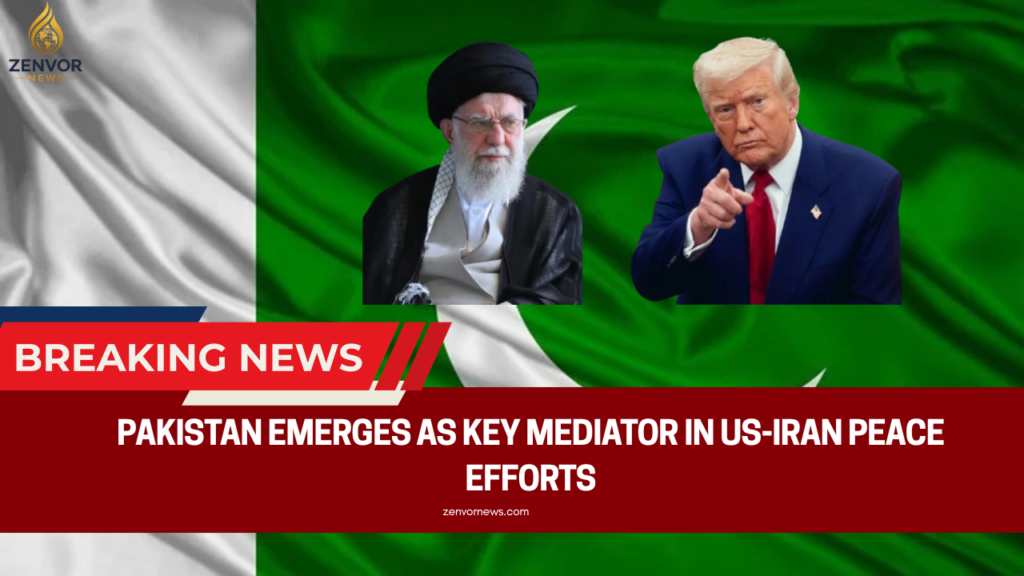
The United States has accelerated its diplomatic efforts to bring an end to the ongoing conflict, with Pakistan emerging as a crucial intermediary between Washington and Tehran.
According to reports by Reuters, backchannel communications between the US and Iran are increasingly being facilitated through Pakistan, highlighting its growing diplomatic importance.
US Signals Conditional Ceasefire Willingness
US Vice President J. D. Vance stated that former President Donald Trump is open to a ceasefire agreement—but only under specific conditions. He warned that if negotiations fail, pressure on Iran will intensify, including the possibility of strikes on Iranian infrastructure.
Strait of Hormuz Tensions Escalate
Iranian President Masoud Pezeshkian, in an open letter to the American public, stated that Iran does not seek conflict and is only acting in self-defense.
Global Leaders Push for De-escalation
Trump held discussions with Saudi Crown Prince Mohammed bin Salman and UAE President Mohamed bin Zayed Al Nahyan regarding the crisis.
Japan’s Prime Minister emphasized that reducing tensions is critical, as the country depends heavily on Middle Eastern oil imports.
Poland also refused US and Israeli requests to deploy defense systems, citing its NATO commitments.
NATO Tensions Rise
Trump has threatened to reconsider US membership in NATO, calling it ineffective and pressuring allies to act on reopening the Strait of Hormuz.
He also warned that failure to cooperate could impact military aid to Ukraine.
Iran Launches Missile and Drone Attacks
Iran’s IRGC reported launching over 100 missiles and drones targeting US assets in the Gulf region, including locations near Bahrain, Kuwait, and the UAE.
Claims include:
- Destruction of radar systems near the UAE
- Attacks on US naval intelligence sites near Bahrain
- Damage to oil tankers in the Gulf
- Strikes on helicopter units in Kuwait
Israeli-Iranian Strikes Intensify
Israel reportedly targeted key Iranian infrastructure, including steel industries and government facilities in cities like Isfahan.
In response, Iran launched missile strikes into Israel, with debris falling near sensitive locations, including areas close to US diplomatic sites.
Israel’s Health Ministry reported over 100 injuries within 24 hours.
Public Support for Pakistan in Iran
Large rallies in Tehran expressed gratitude toward Pakistan, with participants waving Pakistani flags and thanking its people for diplomatic support.
Iranian Foreign Minister Abbas Araghchi also attended, praising national resilience.
Pakistan Reviews Economic Preparedness
Prime Minister Shehbaz Sharif chaired meetings addressing supply chain stability and economic preparedness amid global disruptions.
He stated that Pakistan is effectively managing challenges that have impacted many other countries.
Conclusion
The escalating conflict between the US, Iran, and regional players continues to reshape global geopolitics. While diplomatic channels remain active, rising military actions and strained alliances suggest that the path to peace remains uncertain.
Pakistan’s growing role as a mediator could prove pivotal in determining whether the crisis moves toward resolution or further escalation.