
News By Zenvor News
Intensifying Middle East Crisis and Diplomatic Efforts
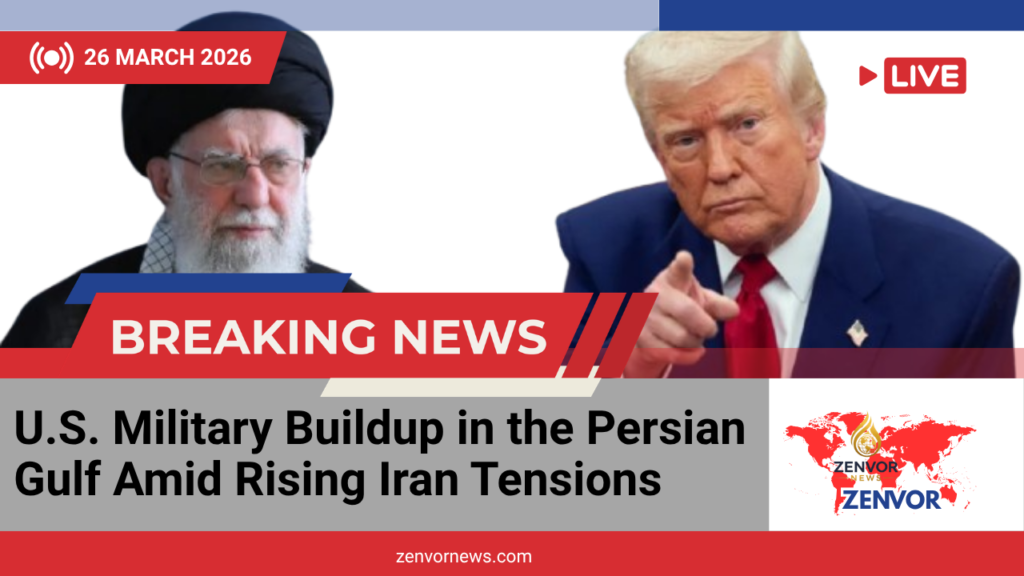
Tensions in the Middle East continue to escalate as the United States increases military pressure on Iran while simultaneously pursuing diplomatic solutions. The situation has entered a critical phase following a temporary pause in U.S. strikes ordered by Donald Trump, potentially opening a window for negotiations.
According to recent reports, the U.S. has proposed a comprehensive 15-point plan to Iran aimed at ending hostilities. The proposal reportedly includes demands for Iran to dismantle key nuclear facilities, halt uranium enrichment, and abandon its ballistic missile program. In exchange, nuclear-related sanctions could be lifted.
However, Iranian officials have publicly denied that formal negotiations are underway, creating uncertainty about the prospects for diplomacy.
Deployment of Elite U.S. Forces to the Persian Gulf
As diplomatic efforts unfold, the Pentagon is simultaneously strengthening its military presence in the region. The potential deployment of the 82nd Airborne Division signals a significant escalation in preparedness.
This elite division, known for rapid deployment and high-readiness operations, could be sent alongside U.S. Marines already stationed in the region. Such a move may involve thousands of additional troops, increasing the likelihood of direct ground operations if tensions worsen.
Military analysts suggest potential objectives could include securing strategic locations or neutralizing threats to regional stability.
Strategic Importance of the Strait of Hormuz
A key focal point of the conflict is the Strait of Hormuz, one of the world’s most critical النفط transit chokepoints. The narrow waterway connects the Persian Gulf to the Gulf of Oman and is essential for global oil shipments.
Iran maintains control over several small islands within the strait, which are believed to be equipped with anti-ship missile systems. Recent U.S. and Israeli strikes have targeted military infrastructure on these islands, including ports and hangars.
Securing these islands could be vital for ensuring safe passage of commercial shipping, especially as the strait faces increasing disruptions.
Regional Responses and Alternative Trade Routes
In response to the growing instability, Gulf nations are exploring alternative strategies. Saudi Arabia and the United Arab Emirates have proposed a new trade route that bypasses the Strait of Hormuz entirely. This route would connect to the Gulf of Oman, reducing dependence on the vulnerable chokepoint.
Meanwhile, countries like Pakistan have expressed willingness to host or facilitate peace talks, indicating broader international involvement in de-escalation efforts.
Drone Threats and Ongoing Military Activity
The conflict has also seen a surge in drone warfare. The UAE has reported intercepting more than 1,800 drones since the start of recent operations, highlighting the scale and intensity of the conflict.
Civilians in affected areas have experienced frequent alerts warning of incoming threats, underscoring the real-time dangers present in the region.
Disputed Narratives and Political Reactions
The situation has sparked sharp political divisions within the United States. Former CIA Director John Brennan publicly questioned the credibility of the Trump administration’s claims regarding negotiations with Iran.
Such statements have fueled debate over U.S. foreign policy strategy and the reliability of intelligence assessments during the crisis.
Outlook: War or Diplomacy?
Despite ongoing military preparations, the U.S. maintains that diplomacy remains an option. The coming days will be crucial in determining whether negotiations can succeed or if the situation will escalate into a broader conflict.
With strategic waterways at risk, global trade implications mounting, and military forces on high alert, the Persian Gulf remains one of the most volatile regions in the world.