News By Zenvor News
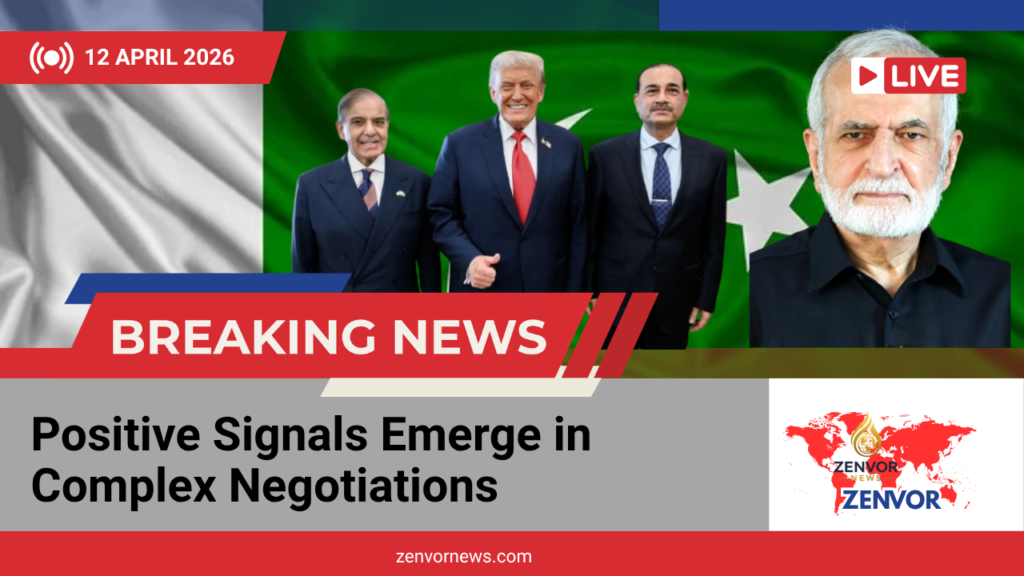
In the final moments of today’s discussion, we aimed to wrap up the key developments of the day. Prominent analysts, including Mohammad Malik, Khawar Ghumman, and Adil Najam, shared their insights on the ongoing situation.
Adil Najam emphasized that the absence of an immediate official statement or declaration should not be viewed negatively. In fact, he suggested that a rushed announcement might have raised suspicions. The complexity of the situation naturally requires time, and this is not a media-driven event where updates are issued every hour. The detailed nature of the negotiations makes delays both expected and reasonable.
Complexity Behind the Scenes
Experts highlighted that many developments connected to the situation may not appear directly related but still play a significant role. International media outlets such as Al Jazeera and BBC reported that Donald Trump may have conveyed a message to Israel advising against targeting Beirut, suggesting that such actions could negatively impact ongoing negotiations.
If accurate, this would be considered a highly positive development, indicating that diplomatic efforts are moving in the right direction.
Signs of Progress
There are several encouraging indicators:
- Delegations are meeting and engaging in face-to-face discussions.
- Technical-level negotiations have already begun.
- Participants appear comfortable enough to engage informally, signaling a relatively smooth process so far.
Had there been serious tensions or setbacks, such early-stage cooperation and interaction would likely not have occurred.
The Role of Ego and National Interests
While technical issues are generally solvable, personal and political egos remain a key challenge. Observers pointed out the strong personal style of Donald Trump, noting how reactive and vocal he has been publicly.
On the other hand, Iran’s position is less about ego and more about national rights and sovereignty—particularly regarding nuclear enrichment for peaceful purposes. If a mutually acceptable framework is agreed upon—similar to models previously discussed, including potential arrangements like those seen in Pakistan—progress is achievable.
The main obstacle arises when personal egos clash with national pride.
Regional Dynamics and Strategic Models
The situation surrounding the Strait of Hormuz appears to be evolving in phases. Analysts compared it to historical agreements such as the Montreux Convention Regarding the Regime of the Straits, suggesting that a phased, structured resolution could emerge.
Global Desire for Stability
One of the strongest positive signals is the broad alignment of interests:
- The United States seeks stability for strategic reasons.
- Iran wants to recover from its losses.
- The global community desires peace to avoid widespread collateral damage.
At present, Israel appears to be the only actor continuing aggressive military actions. However, when the majority of global and regional stakeholders align toward peace, even strong influence has its limits in shaping outcomes.
Conclusion: Moving in the Right Direction
Overall, the outlook remains cautiously optimistic. Progress may come in stages rather than through a single breakthrough, but current signals suggest that developments are heading in a constructive direction.
The process is complex, but the momentum indicates that a positive outcome is increasingly possible.