News By Zenvor News
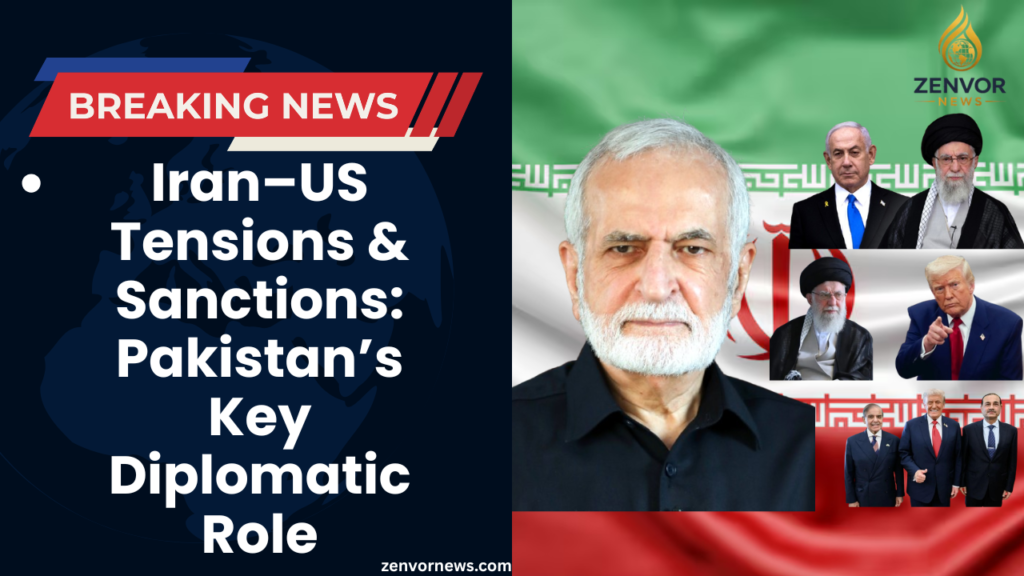
The evolving geopolitical landscape involving Iran, the United States, and global powers like China has entered a critical phase. Recent discussions around sanctions, diplomatic visits, and backchannel negotiations suggest a shift from confrontation toward structured engagement. At the center of these developments is Pakistan, emerging as a key mediator in one of the most sensitive global crises.
Sanctions, Oil Politics, and the China Factor
Recent proposals to impose sanctions on Iran’s oil refineries and dozens of shipping companies highlight a broader strategic contest. This is no longer just about Iran—it increasingly reflects a larger U.S.–China rivalry.
- If sanctions intensify, China is likely to deepen its support for Iran, given its energy dependence and geopolitical alignment.
- Such moves may appear strong in optics but could ultimately backfire by pushing Iran closer to China.
- Similar patterns have been observed before, including sanctions on Russian oil, followed by selective relaxations for countries like India.
This inconsistency suggests that economic pressure is being used more as a negotiation tool than a final strategy.
Economic Warfare vs. Military Conflict
Despite aggressive rhetoric, the situation remains within the non-kinetic domain:
- No large-scale military confrontation has resumed
- Airspaces remain operational
- Diplomatic travel continues across key capitals
This indicates that the conflict has shifted toward economic and diplomatic warfare, rather than direct military escalation.
Limited Strategic Options for the United States
Analysts describe the U.S. position as strategically constrained, often compared to a “zugzwang” scenario (where every move has negative consequences):
- Escalate militarily → Risk of broader regional war and global backlash
- Enter negotiations → Perceived loss of dominance or “face”
- Maintain stalemate → Prolonged uncertainty with economic and political costs
Given these options, moving toward diplomacy appears to be the most viable path.
Global Pressure for De-escalation
There is growing international fatigue with prolonged conflict:
- Public opinion across regions—from Asia to Europe and the Americas—leans strongly against war
- Domestic pressure within the U.S. is increasing
- Internal debates between civilian and military leadership further complicate decision-making
These factors collectively push all stakeholders toward negotiation rather than escalation.
Arrival of Iran’s Foreign Minister in Pakistan
A major breakthrough came with the arrival of Iran’s Foreign Minister, Abbas Araghchi, in Islamabad.
Key Highlights:
- Landed at Nur Khan Airbase late at night (Pakistan time)
- Warmly received by Ishaq Dar and Asim Munir
- Visit described officially as focusing on bilateral ties and regional consultations
However, the timing and context indicate a much broader diplomatic purpose tied to Iran–US negotiations.
Parallel US Diplomatic Movement
Shortly after Iran’s announcement:
- The White House confirmed that Steve Witkoff and Jared Kushner would travel to Pakistan
- Notably absent are key figures from previous engagements, including JD Vance
This suggests a restructured negotiation team and possibly a new phase in diplomatic strategy.
Pakistan as the Central Mediation Hub
Pakistan’s role has become increasingly significant:
- Hosting high-level delegations from both Iran and the United States
- Facilitating indirect communication between both sides
- Engaging in regional consultations, including with Russia and Gulf states
This positions Pakistan as a trusted intermediary, capable of bridging gaps without requiring direct face-to-face engagement initially.
Phases of the Negotiation Process
Experts suggest the current situation has entered an advanced stage of diplomacy:
- Exchange of messages through intermediaries
- Initial alignment of positions
- Engagement with multiple capitals (Tehran, Moscow, Muscat)
- Broader consensus-building
- High-level visits to Pakistan
- Preparation for formal negotiations
- Possible written responses and frameworks being exchanged
Toward a Framework Agreement
While a final deal may still take time, current developments indicate:
- Movement toward defining a negotiation framework
- Potential agreement on basic principles before detailed talks
- A process similar to earlier nuclear negotiations, which took multiple rounds over several weeks
This suggests that while progress is real, a final resolution will likely require sustained engagement.
Conclusion
The current trajectory points toward cautious optimism:
- Sanctions and rhetoric continue, but are balanced by active diplomacy
- Global pressure favors de-escalation
- Pakistan has emerged as a pivotal player in facilitating dialogue
The arrival of key delegations and the resumption of structured engagement mark a turning point. While challenges remain, the shift from stalemate to active diplomacy indicates that a pathway toward resolution is gradually taking shape.